
Industry experts weigh in with their trend predictions

What’s brewing in hospitality for 2026? We checked in with founders, CEOs, brand strategists and operations pros to see what’s on their radar for the new year and what they’re not-so-secretly glad to leave in 2025. Pop the Champagne, folks—this year’s curtain call is officially here.
Trends they’re raising a toast to: experience-first hotels and travel, a real focus on wellness and, of course, AI—because staying human doesn’t mean skipping tech.
Trends they’d rather ghost in 2026: brands built just to be brands, junk resort fees and relentless efficiency that sacrifices the human touch.
So here’s to the new year. 2025, thanks for the lessons. 2026, we’re ready for the upgrades. — Jennifer Glatt
The answers below have been edited for brevity and clarity.
The Experts
What was your favorite trend of 2025?
Ballan: The expansion of outdoor experience-led hotels—the continued creativity of developers, designers, architects and brands to think beyond the four walls of a hotel. These incredible concepts look to nature and the outdoors to amplify the sense of place, offering guests truly special experiences that can’t easily be replicated.
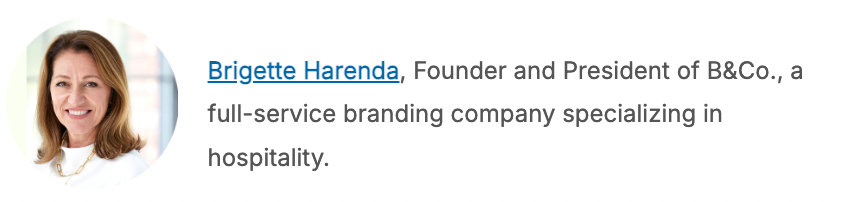
Harenda: I’m seeing more focus on wellness, so we aren’t all relegated to a 400-square-foot gym. This year, I took a yoga class at one resort, experienced an outdoor rooftop gym, got into a cold plunge at two different properties and started noticing healthier options at hotel grab-and-go bars like protein balls and overnight oats. Hotels just need to get more creative with the spaces they have to work with.
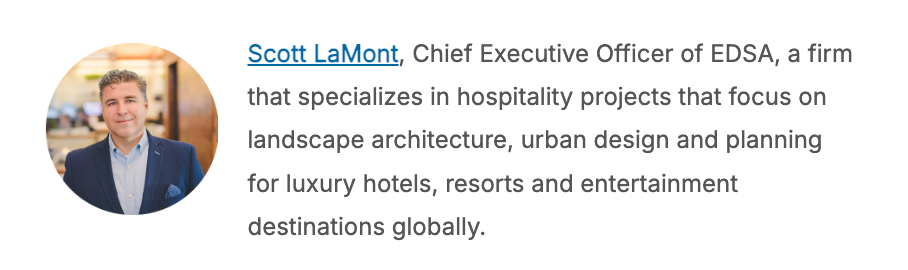
LaMont: One of my favorite trends—one that started well before 2025 and will absolutely be carried forward—is the strong push toward flexible event spaces and adaptable outdoor environments. Over the past several years, we have watched operators fully embrace the idea of creating exterior “rooms” that serve multiple functions, host diverse events, drive revenue and give guests more opportunities to enjoy the outdoors. It’s something we have always prioritized in our work, and seeing the industry lean into it so wholeheartedly has been incredibly encouraging. Guests want to be outside and connected to the landscape, and properties that reimagine their outdoor environments with that in mind are seeing real, measurable benefits. I hope that momentum continues.
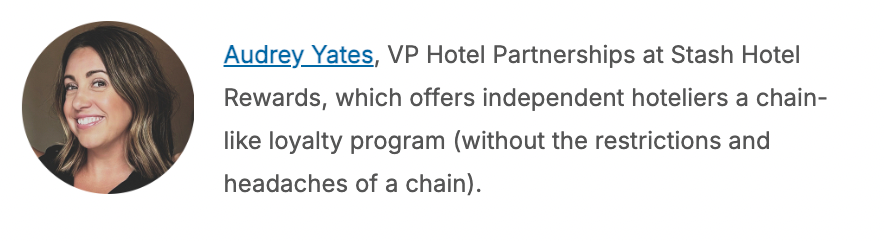
Yates: I think we saw the explosion of experiential travel in 2025, and I’m so here for it. Gone are the days of tent camping and boring RV parks when you want an outdoor adventure (okay, fine, maybe that’s just me who’s over that). The idea that you can visit a National Park and stay in a Geo dome under the stars, or a Mirror Cabin with 360 views, is *chef’s kiss.* I hope it continues to take the industry by storm and disrupt how we see traditional accommodations.
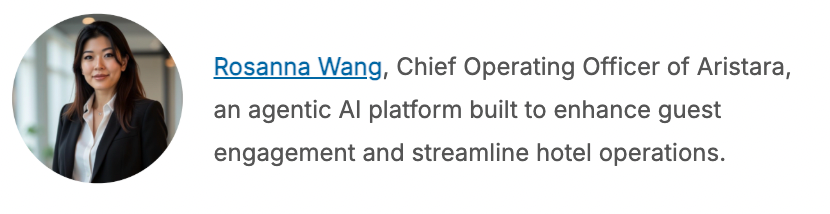
Wang: My favorite trend, or maybe the most novel trend I saw, was AI “people” you can talk to. They are [essentially] big frames with a person you could interact with. It reminded me of the moving photos in Harry Potter; it’s kind of magical.
Malfair: My favorite trend is a carry-over from 2024, the focus on better sleep. It's redefining wellness. Wellness used to be massages and infused water. Now it’s “Can I get eight hours without hallway noise and a pillow that feels like a yoga block?"
What trends do you predict for 2026?
Ballan: [I predict] the rise of the upscale soft brand. We’re seeing the major flags launch new upscale soft brands with lighter F&B requirements and more design flexibility. This offers owners a compelling middle lane: the ability to tell a locally relevant, design-led story commanding higher ADRs while keeping operations streamlined and reducing distribution costs. The profit maximization playbook is more important than ever as the industry faces increasing cost pressures. I expect these upscale soft brands to gain traction in 2026, making the boutique hospitality experience more accessible across chain-scales and service offerings.
Harenda: The economy is pushing the hospitality industry toward efficiency and cost-saving technologies… Lifestyle hotels have elevated what travelers want and expect in a hotel stay. A clean room, a great bathroom and on-property food and beverage are table stakes today. Consumers crave connections and demand an experience.
Even though travelers are tightening their wallets, they’ve gotten a taste for what well-branded hotels deliver. They’re not going back to the free make-your-own waffles. So, how do hoteliers compete and still make money? By focusing on a great story that the entire property can rely on as the foundation for a true guest experience.
We’re seeing this with developers acquiring and repositioning old motels. We’ve been calling this “Super 8 to Super Cool” for a while now, but these are the real estate deals that allow developers to get into hot markets without a massive investment. We branded a property in Moab, Utah—a red-hot market with nearly impossible barriers to entry. The developers flipped a Motel 6 into an indie property and, while still pricey because of the demand in Moab, it fully repurposed an underutilized hotel. The brand visuals and messaging are a huge part of how that hotel is being marketed today.
LaMont: We are going to continue seeing a rise in luxury-oriented offerings across all levels of hospitality. Every tier is stepping up its game—adding thoughtful touchpoints, elevating service and creating more bespoke experiences. There has been a real shift toward quality, and the brands investing in that are thriving. I expect that momentum to carry strongly into 2026.
Yates: I think we can all agree that 2025 took us a bit by surprise. Our industry shook a bit as we coped with travel restrictions, economic issues and some uncertainty. I fully expect that this next year will be a year where we are able to prepare more for what’s to come.
Hotels are getting creative in the very best ways. Independent hotels set the bar with experience, and I wholeheartedly think we will see them shine in 2026. Gone are the days of simply checking into a hotel to sleep; guests increasingly want a sense of place: local art, community storytelling and design that is rooted in the local culture. Independents get to shine here; they don’t have a playbook of how they can curate that guest experience. More hoteliers are choosing to stay independent (yay!), so they are going to need all the tools and help they can get to double down on their identity, local roots and experience. It also helps to join up with strong partners in the industry, from F&B, the best tech stacks and loyalty programs of course!
Wang: I expect to see more AI concierges and programs that help to consolidate all communications channels. There will be products that allow hoteliers to respond to guests on Booking.com, Instagram, WhatsApp—all channels in one platform. I expect the adoption of AI services to be slow in hospitality, unless there are pressures to increase employee wages. In that case, the adoption of AI or anything that automates operations will be on the rise. For example, kiosks that replace the need for a robust front desk staff; hoteliers tend to be rather risk-averse unless there is financial pressure that forces them to replace staff. Otherwise, for most humans at this current moment, hospitality = humans.
Malfair: Trends come and go in hospitality, so I'll start with sharing that I hope independent hotels shift out of trend-chasing and into something more meaningful for their brand and guests.
That said, not a trend but a big shift for 2026 is independent hotels finally embracing AI-ready marketing. And by that, I don’t mean adding a chatbot or hiring tech to answer the phones. I mean a real move toward marketing that gets closer to the guest, not using AI or automations to get further away.
Hotels will start treating their content as data, because that's how AI sees it. I am hoping we'll see better, more engaged review responses, more personal guest engagement, social media that is more behind the scenes and websites built to function as answer engines for AI search. It's exciting because this is what I think it was meant to be from the beginning of digital marketing—more helpful, more value-driven.
What’s one trend you wish would go away in 2026?
Ballan: The “brandification” of everything. Everyone with a cool concept or one great hotel immediately wants to make it a brand. Sometimes the strongest brands are brands of one.
Harenda: What I personally hate is contactless check in or room keys. They never work and as a solo female traveler, I want someone there on property to check me in.
LaMont: If there is one trend I would be happy to see fade, it is when operational convenience overrides original design intent, particularly at the arrival experience. Too often we see valets or operations teams reshape the front door sequence in ways that unintentionally diminish the guest’s first impression. Even if it improves efficiency, it rarely enhances the overall experience. Over time, these small operational shifts accumulate, and they are almost always on the list when a property undergoes repositioning. Ultimately, whether it’s a five-star resort or a mid-market hotel, arrival should feel intentional, welcoming and reflective of the design vision. I would love to see the industry continue elevating that first impression and bringing the heart of hospitality back to the forefront.
Yates: One thing that HAS to go: junk resort fees. Charging $40 for Wi-Fi, a pool towel and a free snack is rubbing guests the wrong way. Services that people expect when they stay (WiFi, daily housekeeping) can’t be part of the fees.
Wang: The trend I hope will disappear is kiosks that live-stream people from other countries [to] replace front desk [staff]. I think this type of product betrays my national pride. I’m not sure if I’m comfortable with the idea of replacing Americans with cheaper labor offshore. We’ve done enough of that already.
Malfair: I would happily retire the trend of OTAs calling themselves discovery. Booking and Expedia landing apps in OpenAI marketplace doesn't make them "discovery" as much as they want to think they are. (If that’s discovery, then my toaster is a Michelin-star chef. It's a mismatched claim.)
OTAs are distribution. Important, yes. Useful, yes. But they don’t create demand, shape desire or tell your story. Independent hotels do that. DMOs do that. Guests deserve better experiences than commoditized listings with a splash of ad spend on top.
Thanks for reading today's edition! You can reach the newsletter team at newsletter@mintpillow.co. We enjoy hearing from you.
Interested in advertising? Email us at newslettersales@mvfglobal.com
Mint Pillow is curated and written by Jennifer Glatt and edited by Lesley McKenzie.