
Plus: Recognizing repeat guests | Infrastructure before AI

The biggest misses in hotels happen in the blind spots. We’re digging into why repeat guests slip through the cracks (and what that costs you), how sharing a touch of personality can convert a transaction into loyalty and why AI won’t save you if your core infrastructure is a mess.
Different stories, same lesson: the fundamentals compound. Get them right, and everything performs better.

Falling through the cracks. Why it’s so easy to overlook repeat guests (and why it’s an expensive mistake).
Discouraging decline. A report from the nation's largest hospitality workers’ union finds that the number of employed hospitality workers dropped by a staggering 98,000 from December 2024 to December 2025.
Vibes without the playlist. This generative music platform creates continuous, non-repeating ambient music in real time, resulting in an endless stream of songs.
Can’t be copied. Skip the copy/paste, please. What a place is willing not to be creates a clarity of identity that’s impossible to imitate.
Homegrown hospitality. Adaptive reuse is a guest magnet when you honor the story, preserve the soul and program it with purpose. The Lantern Columbia (South Carolina) does all three with aplomb and adds inclusive hiring to boot.



Sensory sanctuary
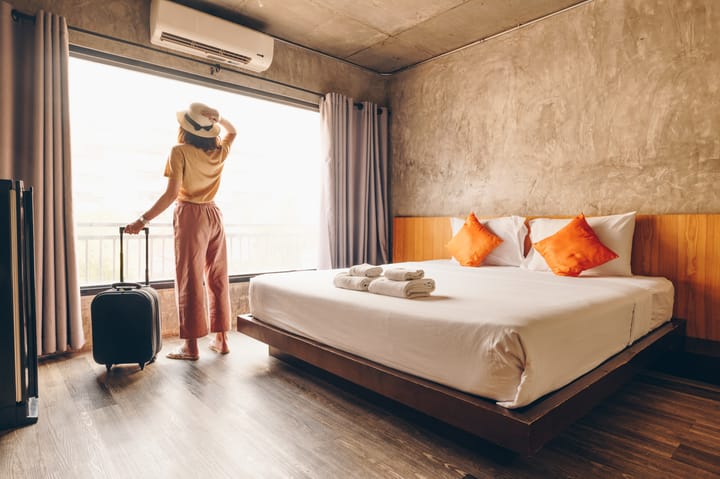
Organic design meets surf culture at The Sitio in Virginia Beach, Va. The 20-room boutique hotel is making waves with a reception desk carved from a massive tree trunk and guest rooms that trade traditional closets for custom-built surf racks.
Why it matters: The Sitio's "less-is-more" approach creates a premium minimalist vibe. Bedrooms are deliberately understated with natural materials, Belgian Libeco linens and a soothing, neutral palette. Local and international artists, including French photographer and street artist JR and Virginia Beach native Schuyler Beecroft, provide the artwork that is central to the hotel's concept. (Boutique Hotelier USA)
A guestroom at The Sitio. (Courtesy)

It’s personal
Sharing a little personality goes a long way, and a quick photo and bio on social platforms for your front-of-house team can turn a standard transaction into a real connection. It’s a low-lift, high-reward way to spark conversation.
Why it matters: Turns out sweating the small stuff makes a difference. By showcasing the humans behind the hustle, you can foster an environment where guests feel seen and staff feel valued, helping bridge the gap between "staff" and "host." (CX Dive)

Software as a silent copilot
Fragmented, segmented, manual and outdated—do any of these adjectives describe your hotel tech? If you’re utilizing AI to make your systems smarter, you better make sure you start with a solid foundation. Your AI is only as powerful as the “boring” core infrastructure it sits on.
Why it matters: Automation works when the rules governing your inventory and revenue are airtight. Ensuring your payments, inventory, and data all talk to each other creates a “clean engine” that enables AI to drive pricing accuracy and ancillary revenue. (Phocuswire)

"Flexibility is crucial in an environment where people are constantly on the move and may only have short windows for training." - DREW SMITH, DIRECTOR OF TRAINING, QUORE
Ditch the training manual
Training new hires doesn't have to be a bottleneck that pulls your best leaders away from the floor. Shifting to digital training tools means your team can master everything from your signature welcome to complex back-end systems right from their own devices.
Why it matters: Modern online platforms are making it easier than ever to distribute "bite-sized" knowledge, ensuring your standards stay high without the operational headache of constant shadow-training. A well-trained team is a relaxed team, and guests can always feel the difference. (Quore)
Thanks for reading today's edition! You can reach the newsletter team at newsletter@mintpillow.co. We enjoy hearing from you.
Interested in advertising? Email us at newslettersales@mvfglobal.com
Mint Pillow is curated and written by Jennifer Glatt and edited by Bianca Prieto.